
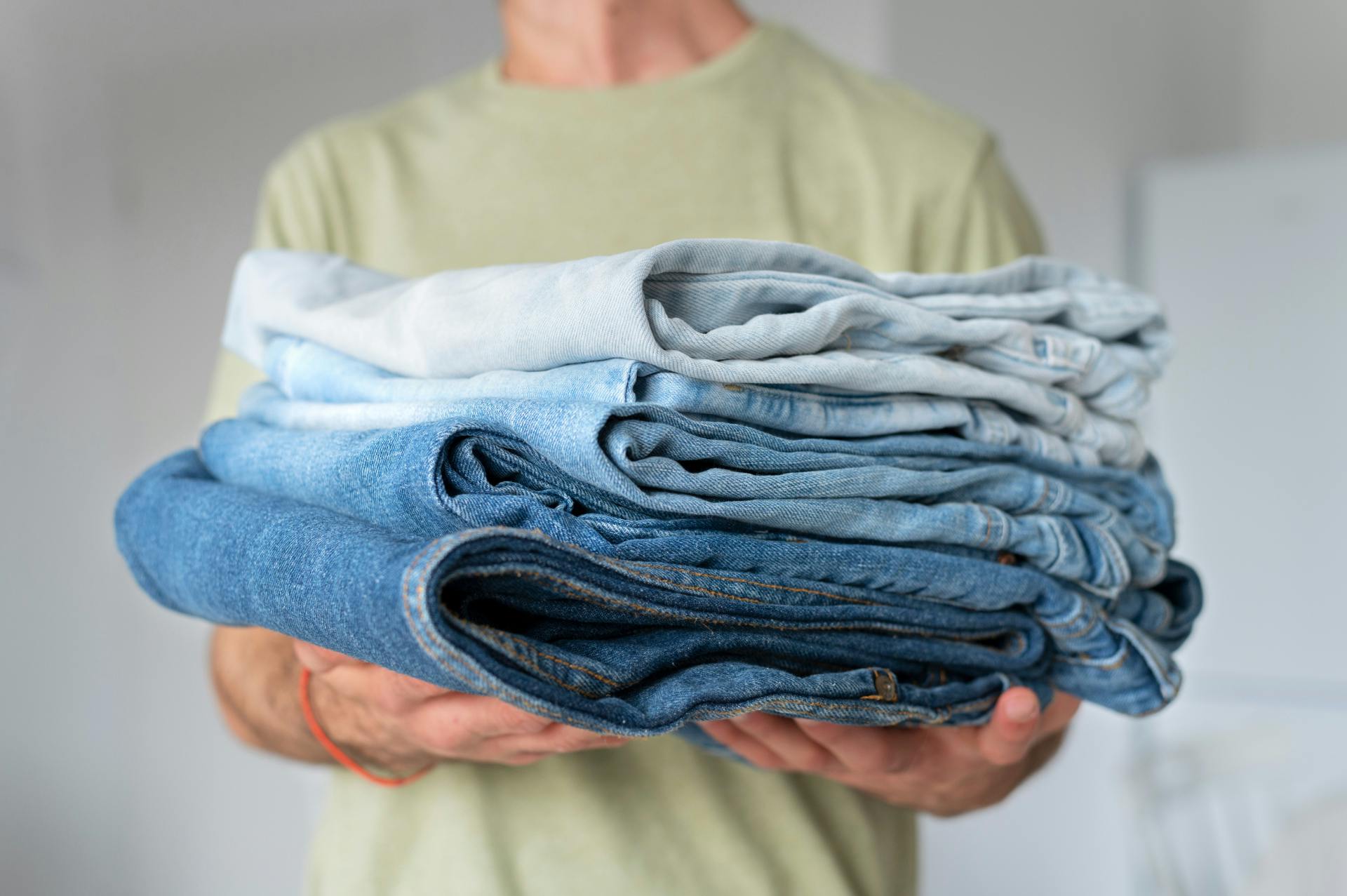
💬 "How often should I wash my jeans, and what's the proper method?"
Jeans are the ultimate wardrobe staple, but they're also one of the most misunderstood garments when it comes to care. Wash them too often, and they fade and wear out quickly. Wash them too rarely, and they start to smell or harbour bacteria. Use the wrong method, and you'll end up with shrunken, stiff jeans that no longer fit properly.
This guide walks you through everything you need to know about washing jeans the right way, with specific advice for Singapore's humid tropical climate. You'll learn the proper techniques that preserve colour, maintain fit, and extend the life of your denim for years to come.
Why Denim Is Different From Other Fabrics
Understanding what makes denim unique helps you care for it properly. Unlike most fabrics, where dye penetrates completely, indigo dye in denim sits primarily on the surface of the threads. This is why jeans fade naturally with wear and washing—the colour is designed to gradually wear away, creating that sought-after vintage look.
Denim's characteristic diagonal ribbing comes from its twill weave construction. This pattern makes the fabric incredibly durable, which is why jeans were originally workwear. However, this same structure means the fabric responds dramatically to heat and agitation. Cotton fibres contract when exposed to hot water or dryer heat, causing the shrinkage that has ruined countless pairs of perfectly-fitting jeans.
Modern jeans come in several varieties that need different care approaches. Raw or dry denim arrives unwashed and stiff, holding deep indigo colour that develops unique fading patterns over time. Pre-washed denim has already been softened and slightly faded during manufacturing. Stretch denim blends cotton with elastane or spandex for flexibility, but these synthetic fibres break down faster than pure cotton, requiring more careful handling.
How Often Should You Actually Wash Jeans
This question sparks endless debate among denim enthusiasts, but the answer depends on your jean type and wearing conditions.
For Raw Denim Purists
Traditional raw denim care involves waiting six months before the first wash. This extended wear period allows natural fading patterns to develop in areas of stress and movement—the whiskers behind your knees, the honeycomb creases at the back of your knees, and the fading on your thighs. These patterns become permanent character marks that make your jeans uniquely yours.
However, in Singapore's climate, six months without washing is impractical for most people. The heat and humidity create conditions where bacteria thrive, and odours develop much faster than in cooler, drier climates. A more realistic approach for Singapore raw denim wearers is three to four months before the first wash, then washing every twenty to thirty wears afterwards.
For Regular Pre-Washed Denim
Most people wear pre-washed jeans that don't require the extended break-in period. These jeans benefit from washing every four to six wears under normal conditions. However, Singapore's climate changes this calculation significantly.
Higher temperatures mean more perspiration, and humidity creates the perfect environment for bacterial growth. That combination means jeans worn in Singapore typically need washing every three to four wears instead of the four to six recommended for temperate climates. If you've been particularly active, caught in the rain, or notice your jeans feel damp from humidity, wash them sooner, regardless of wear count.
For Stretch Denim
Stretch jeans contain elastane or spandex fibres that provide flexibility and comfort. These synthetic fibres break down faster than cotton, especially when exposed to body oils and perspiration. Stretch denim actually benefits from more frequent washing—every three to five wears keeps the elastic fibres performing well and prevents them from becoming permanently stretched out.
For Light-Colored Jeans
White or light-colored jeans show every mark and stain, requiring washing after just one or two wears. The lighter the colour, the more frequently you'll need to clean them to maintain their appearance.
Reading the Signs That Washing Time Has Arrived
Beyond counting wears, your jeans themselves tell you when they need cleaning:
- Any detectable odour means bacteria have multiplied enough to produce a smell—time to wash
- Visible dirt, dust, or stains on the fabric surface
- The fabric feels stiff, grimy, or uncomfortable against your skin
- Knees have bagged out and lost their shape
- The colour looks dull or dusty rather than rich and vibrant
- You've absorbed cooking odours, smoke, or environmental smells
In Singapore's humid environment, trust your nose and your eyes more than any arbitrary wear count. Our climate accelerates soil accumulation and bacterial growth, so local conditions should guide your washing schedule.
Preparing Your Jeans for Washing
Proper preparation prevents damage and ensures effective cleaning. Start by emptying all pockets completely—front, back, and that small coin pocket. Tissues left in pockets disintegrate into lint that clings to fabric, while coins and keys can damage both your jeans and washing machine.
Close all fastenings before washing. Zip the fly completely and button the waistband. Open zippers can snag fabric or scratch other items in the wash, while unfastened buttons stress the buttonhole area unnecessarily.
The Inside-Out Rule
Always turn jeans inside out before washing. This single step protects the outer surface from abrasion against the washing machine drum and other garments. It reduces direct contact between the detergent and the visible dyed surface, minimising fading. The inside surfaces that actually touch your skin get cleaned effectively, while the outside colour stays vibrant longer.
Handling Stains Before Washing
Check for stains and treat them before the main wash. Once a stain goes through a wash cycle without pre-treatment, it often sets permanently. Different stains need different approaches:
For oil-based stains like grease or cooking oil, apply a small amount of dish soap directly to the mark and gently rub the fabric together. Let it sit for ten minutes before washing—the dish soap breaks down oils effectively.
Grass stains respond well to white vinegar. Apply it directly, gently brush with an old toothbrush, then rinse before the main wash.
Mud should be allowed to dry completely first. Trying to wash wet mud just spreads it and pushes it deeper into the fabric. Once dry, brush off as much as possible, then wash normally.
For food and beverage spills, blot immediately without rubbing, which spreads the stain. Rinse from the back of the fabric with cold water, pushing the stain out the way it came in rather than through the fabric. Apply a small amount of detergent directly to the spot and let it work for fifteen minutes.
The Right Way to Machine Wash Jeans
Machine washing is perfectly fine for jeans when done correctly. The key is choosing the right settings and handling them properly.
Water Temperature Is Critical
Always use cold water for washing jeans. This isn't a suggestion—it's the single most important factor in preventing damage. Cold water means 30°C or below, and colder is actually better.
Hot water causes cotton fibres to contract, resulting in significant shrinkage. A single hot wash can shrink jeans by five to ten per cent in both length and width. That's the difference between jeans that fit perfectly and jeans you can no longer button. Hot water also accelerates indigo dye loss dramatically, potentially fading your dark jeans several shades lighter in a single wash.
Beyond shrinkage and fading, hot water weakens fabric fibres over time and breaks down the elastane in stretch denim. Even warm water carries these risks, just to a lesser degree. Cold water cleans effectively while protecting your jeans from all these problems, and it saves energy as a bonus.
Selecting the Right Cycle and Settings
Choose a gentle or delicate cycle for washing jeans. These cycles use less agitation and lower spin speeds, reducing mechanical stress on the fabric. Set the spin speed to low or medium—high-speed spinning isn't necessary for jeans and just adds wear.
Load your washing machine properly with no more than two to three pairs of jeans per load. Jeans need room to move freely in the water for effective cleaning. Overloading prevents proper cleaning, creates excessive wrinkling, and stresses both your jeans and your machine.
Choosing and Using Detergent
Liquid detergent works better than powder for jeans because it dissolves more completely and leaves less residue. Choose mild or gentle formulas without harsh chemicals or brighteners. Some companies make denim-specific detergents, though these are optional rather than essential.
Use less detergent than you think you need—about half to two-thirds of the recommended amount. Excessive detergent doesn't clean better; it just leaves residue in the fabric that makes jeans stiff and actually attracts dirt faster. It also requires more rinsing to remove completely.
The Vinegar Secret for Colour Preservation
Adding half a cup of white vinegar to the rinse cycle helps preserve denim colour. The vinegar helps set the dye, reducing fade with each wash. It also acts as a natural fabric softener and eliminates any detergent residue. Despite concerns about smell, the vinegar odour disappears completely once the jeans dry.
Run a complete wash cycle without interruption, and consider adding an extra rinse cycle. Thorough rinsing removes all detergent, preventing stiffness and buildup. Once the cycle completes, remove jeans immediately—leaving them sitting in the machine promotes mould growth, especially problematic in Singapore's humidity.
Hand Washing for Special Jeans
Some jeans deserve the extra care that hand washing provides. Raw denim, vintage pieces, designer jeans, or any denim with delicate embellishments benefit from the gentle control of hand washing.
Fill a basin or bathtub with enough cold water to completely submerge your jeans. Add just one tablespoon of gentle detergent and mix until dissolved. Submerge the jeans completely and let them soak for fifteen to thirty minutes for moderate soiling, or up to an hour for heavier dirt.
Gently agitate by swirling the jeans in the water and squeezing the fabric softly. Never twist or wring denim—this distorts the fabric and can damage the weave structure. Pay special attention to the dirtiest areas like knees, seat, and cuffs.
Drain the soapy water and refill with clean, cold water for rinsing. You'll typically need two to three rinse cycles until the water runs completely clear. To remove excess water, gently squeeze without twisting, then press the jeans between towels to absorb moisture.
Critical Mistakes to Avoid
Certain practices damage jeans irreversibly, and avoiding them is as important as following correct techniques.
Never use hot water—it causes shrinkage and fading that cannot be reversed. Never use bleach, which damages denim fibres, creates uneven spotting, and dramatically weakens the fabric. Don't overload your washing machine, as cramped jeans don't get properly cleaned or rinsed.
Avoid washing dark and light jeans together due to colour transfer risk. Never leave jeans sitting damp in the washing machine—in Singapore's humidity, mould develops quickly and creates odours that are extremely difficult to remove.
Don't dry-clean jeans regularly. Despite being called "dry cleaning," the harsh chemicals used are unnecessary for denim and expensive for routine care. Save professional cleaning for truly difficult situations rather than regular maintenance.
Drying Jeans Without Damage
How you dry jeans matters as much as how you wash them. The drying method determines whether your jeans maintain their size, shape, and colour.
Air Drying Is Best
Air drying is always the safest choice for jeans. Hang them by the waistband using clothespins or a pants hanger in a well-ventilated area. In Singapore, air circulation is essential—position a fan to blow directly on the jeans, dramatically reducing drying time and preventing mould.
For indoor drying, choose the most ventilated space available. Make sure jeans don't touch other garments directly, as wet denim can transfer dye. Complete drying typically takes twenty-four to forty-eight hours in Singapore's humid climate. Never rehang jeans until they're completely dry throughout.
If drying outdoors, hang them in a shaded area. Direct sunlight fades the indigo colour rapidly, defeating the purpose of all your careful washing. Morning drying works best when the humidity is lower. Turn jeans inside out to protect the outer colour, and bring them in before evening when humidity rises again with dew.
Singapore-specific strategies make air drying more effective. Use a dehumidifier near the drying area if you have one. Hang jeans in an air-conditioned room for much faster drying. Never leave damp jeans in a closed closet or hamper—the trapped humidity creates perfect conditions for mould.
When You Can Use the Dryer
Machine drying is acceptable only in specific situations: when jeans have already shrunk to your desired fit, when stretch denim needs shape restoration, or when time constraints make air drying impossible.
If you must use a dryer, select the lowest heat setting or air-dry option. Remove jeans while they're still slightly damp and hang them to finish drying naturally. Never run a full dry cycle—twenty to thirty minutes maximum is plenty.
Machine drying risks significant shrinkage in length, especially accelerated colour fading, fabric weakening over time, and waistband warping. If your jeans fit perfectly now, avoid the dryer entirely. Shrinkage is unpredictable and often irreversible.
Special Care for Different Jean Types
Different denim styles require adjusted approaches to maintain their specific characteristics.
Raw Denim Requires Patience
Raw denim enthusiasts avoid washing for the first several months of wear, allowing natural fading patterns to develop. During this initial period, spot clean any stains and air out jeans regularly. Some people freeze raw denim overnight to kill bacteria and reduce odour without washing.
When the first wash time arrives after three to six months, hand-wash in cold water with minimal agitation. Keep jeans inside out throughout the process and hang dry completely. Accept some colour loss—this is normal and contributes to the unique character that raw denim develops.
After the first wash, subsequent cleanings should occur every twenty to thirty wears or whenever visibly needed. Continue using cold water and gentle handling. The gradual fading creates the authentic worn look that makes raw denim special.
Stretch Denim Needs More Attention
The elastane or spandex in stretch denim breaks down faster than pure cotton. Body oils damage elastic fibres, so stretch jeans actually need more frequent washing than traditional denim—every three to five wears keeps them performing well.
Always use cold water, as heat destroys elasticity permanently. Never machine dry stretch denim—the heat damages the elastic fibres irreversibly. Always hang dry to maintain shape, and don't over-wear stretch jeans without washing, as they'll stretch out and lose their shape.
Protecting Distressed and Ripped Jeans
Jeans with intentional rips and distressing need extra protection during washing. Always turn them inside out and consider using a mesh laundry bag for added protection. Hand washing is preferred for heavily distressed pieces.
Never machine dry distressed jeans—the heat frays holes larger and can cause additional unintended damage. Air dry only and handle gently throughout the washing process.
Designer Jeans Deserve Investment Protection
Expensive or designer jeans justify extra care to protect your investment. Follow the care label instructions exactly without experimenting. Hand washing or professional cleaning is often the best choice. Never use the dryer—hang dry exclusively.
Store designer jeans properly between wears by hanging them or folding them along natural creases. Consider using professional denim care services for deep cleaning rather than risking damage with home methods.
Maintaining Jeans Between Washes
Proper maintenance between washes extends the time before cleaning becomes necessary and keeps jeans fresh.
Spot Cleaning for Minor Issues
Fresh spills should be blotted immediately with a clean cloth, then dabbed with a damp cloth using cold water. Never rub, as this spreads the stain and pushes it deeper into the fabric. Allow the spot to air dry completely.
For small existing stains, use a damp cloth with a tiny amount of detergent to gently dab the affected area. Rinse with a clean, damp cloth and air dry. This targeted approach handles minor issues without requiring a full wash.
Storage Practices That Preserve Quality
Between wears, hang jeans by the belt loops or waistband where air can circulate freely. Don't hang jeans too close together, and never store them damp. Avoid plastic bags, which trap moisture and can lead to mildew.
For long-term storage, fold jeans along their natural creases and place them in breathable fabric bags rather than plastic bins. Keep them in a cool, dry location, and consider cedar blocks to prevent musty odours.
Preventing Odours in Singapore's Climate
Turn jeans inside out after wearing and hang them to air for twenty-four hours before storing. This simple step allows absorbed moisture and odours to dissipate. Rotate between multiple pairs of jeans rather than wearing the same pair for consecutive days.
In Singapore's climate, change jeans if they become damp from humidity or perspiration rather than continuing to wear them. Use moisture absorbers in storage areas and air-condition your closet space if possible. Never put sweaty jeans directly into a laundry basket—air them out first to prevent mould and odour development.
Dealing With Shrinkage Problems
Prevention is always easier than correction when it comes to shrunken jeans.
Preventing Shrinkage
The primary prevention methods are straightforward: always use cold water, never machine dry, and buy the correct size initially rather than sizing up in expectation of shrinkage. Check whether jeans are pre-shrunk—look for "sanforized" on the label, which indicates the fabric has been treated to minimise shrinkage.
If Shrinkage Happens
If jeans do shrink, you can attempt to restore fit, though results are limited. One method involves spraying the shrunken areas with cold water, then gently stretching while damp. Wearing the jeans while they dry stretches them to your body shape—move around, squat, and bend to encourage stretching.
Another approach is soaking jeans in cold water for thirty minutes, then gently stretching the length and width. Lay them flat to dry while continuing to stretch periodically, and weigh the ends to maintain stretched length.
However, once cotton fibres contract significantly from heat exposure, restoration is partial at best. The molecular structure has changed, and you cannot fully reverse that process. This is why prevention through proper washing and drying is essential.
When Professional Cleaning Makes Sense
Most jeans can and should be washed at home, but certain situations call for professional help.
Professional dry cleaning is appropriate for extensive stains that home treatment cannot remove, jeans with delicate embellishments like beading or embroidery, pieces with leather or suede trim, vintage denim with fragile fabric, or structured designer jeans where any damage would be costly.
Professional cleaners use specialised denim care techniques, stain-specific treatments, and colour preservation methods. They can properly press jeans without creating shine marks that home ironing sometimes causes.
For expensive designer jeans or truly difficult stains beyond home treatment capabilities, professional care provides expertise and equipment that protects your investment. Presto Drycleaners Singapore offers specialised denim cleaning services with colour preservation techniques and proper finishing tailored to preserving your jean investments.
Common Washing Mistakes and How to Avoid Them
Learning from others' errors saves your jeans from damage.
Over-washing wears out fabric prematurely, causes excessive fading, and wastes resources. Wash only when jeans actually need it, based on visible soiling or odour rather than following an arbitrary schedule.
Using too much detergent leaves residue in fabric, requires additional rinsing, and makes jeans stiff. Use half the recommended amount—it's genuinely sufficient for cleaning.
Ignoring care labels is perhaps the most common mistake. Different denims have different needs, and manufacturers have tested their specific fabric to create those recommendations. Read and follow label instructions rather than assuming all jeans are identical.
Washing jeans with other garments risks dye transfer to lighter items and zipper damage to delicate fabrics. Wash jeans separately or only with other jeans of similar colours.
Not turning jeans inside out accelerates outer surface fading and causes friction damage to the visible side. Always invert before washing—this simple step significantly extends colour life.
Leaving jeans in the washing machine after the cycle ends enables mould growth in Singapore's humidity, creates deep wrinkles that are difficult to remove, and causes musty odours. Remove jeans immediately and begin drying right away.
Environmental Considerations for Denim Care
Responsible jean care benefits both your jeans and the environment.
The single most effective environmental action is washing less frequently. Each wash avoided saves water, energy, and detergent while extending your jeans' lifespan. When you do wash, use cold water exclusively—this saves approximately ninety per cent of the energy compared to hot water washing.
Run full loads without overloading to maximise water efficiency. Air drying instead of machine drying saves substantial energy. Choose eco-friendly detergents that minimise chemical release into water systems. Front-loading washing machines use significantly less water than top-loaders if you're in the market for a new machine.
Sustainable denim care extends beyond washing technique. Repair jeans rather than replacing them when possible. Buy quality jeans that last longer in the first place. Proper care extends lifespan by two to three times compared to frequent washing with hot water and machine drying, dramatically reducing consumption and waste.
The Bottom Line on Washing Jeans
Successful jean care comes down to following several core principles consistently:
Wash infrequently based on actual need rather than arbitrary schedules. Always use cold water to prevent shrinkage and fading. Turn jeans inside out every time to protect the colour and fabric. Use gentle cycle settings to reduce wear and tear. Apply minimal detergent to avoid residue buildup. Air dry whenever possible to prevent shrinkage and damage. Never use hot water or the dryer, as these are the primary causes of jean damage.
For Singapore specifically, adjust by washing slightly more often due to climate effects, ensure complete drying given humidity challenges, use fans to accelerate air drying, and store jeans in ventilated areas to prevent mould.
Quality preservation through proper care extends Jean's lifespan dramatically. Jeans washed correctly can last two to three times longer than those subjected to frequent washing with hot water and machine drying. The initial extra effort yields long-term cost savings and better-fitting, better-looking jeans that maintain their character for years.
Contact Presto Drycleaners Singapore for expert denim care guidance and professional services when your jeans need specialised attention beyond home care capabilities. Professional consultation ensures your denim investments receive the treatment they deserve.
Your Personal Laundryman,
Presto Drycleaners