
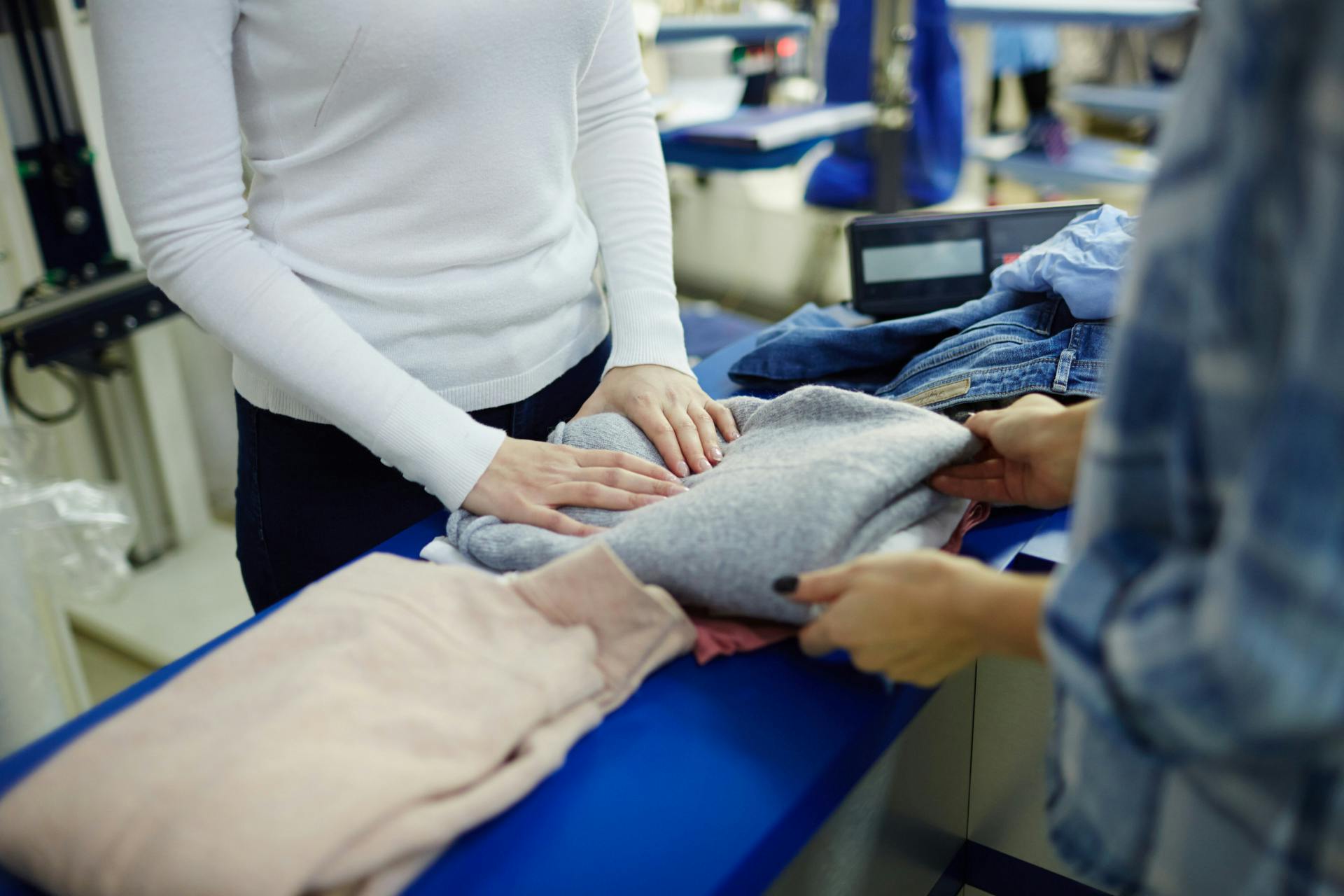
💬 "Is dry cleaning worth the extra cost?"
Dry cleaning provides fabric care benefits that extend beyond appearance maintenance. Understanding the functional differences between water-based washing and solvent-based dry cleaning enables informed decisions about garment care investments and long-term wardrobe management.
This guide examines the practical benefits of professional dry cleaning, comparing costs and outcomes against home washing alternatives, with specific considerations for Singapore's tropical climate.
Understanding Dry Cleaning vs. Home Washing
What Dry Cleaning Actually Does
Dry cleaning uses chemical solvents instead of water to clean fabrics. Despite the term "dry," the process uses liquid, just not water-based liquid.
Water causes natural fibre swelling and alters fabric structure during wet-dry cycles. It cannot dissolve oil-based soils effectively and may affect interlinings and structured components, potentially causing colour bleeding or fading. In contrast, solvents clean without causing fibre swelling, maintaining the original fabric structure while effectively dissolving oils and oil-based soils. This preserves fabric construction, protects dyes and colours, and maintains structural elements like padding and interfacing.
Structured garments such as suits, blazers, and coats contain multiple fabric layers that react differently to water. Solvents clean these complex constructions without disrupting their integrity.
The Oil Problem in Home Washing
Human skin constantly produces oils (sebum) that transfer to clothing at contact points—collars, underarms, cuffs, and inner waistbands. These body oils are not water-soluble, meaning standard detergents cannot fully remove embedded oils even when garments appear clean.
Accumulated oils attract and trap dirt particles while providing food for bacteria that cause persistent odors. Over time, these trapped oils undergo chemical oxidation, resulting in yellowing (especially on white fabrics), texture changes, odor development, and accelerated fiber degradation.
Petroleum-based dry cleaning solvents specifically dissolve oils, achieving complete oil removal from fibres and eliminating oil-bonded dirt. This prevents oxidation yellowing and removes bacterial food sources. UV light reveals oil residue invisible to the naked eye—home-washed garments show significant fluorescence at oil accumulation points even when appearing clean, while dry-cleaned garments show minimal to no fluorescence.
Key Benefits of Regular Dry Cleaning
Benefit 1: Extended Garment Lifespan
Dry cleaning preserves fabric structure by avoiding the fiber swelling and contraction cycles that occur with water washing. The original weave pattern remains intact, elasticity is maintained longer, and seam integrity stays protected. The gentler cleaning process involves less mechanical stress than washing machine agitation, with no high-speed spinning, professional handling that prevents stretching, and controlled drying conditions.
A six-month comparison study demonstrated these differences clearly. Two identical garments received different care—one dry cleaned every 3 wears (15 cleanings total), the other home washed every 2 wears (22 washes total). After six months, the dry-cleaned garment showed minimal wear signs and maintained its original appearance, while the home-washed garment displayed visible wear, including pilling, fading, loose buttons, and texture changes. The dry-cleaned garment projected a 2-3 year lifespan before replacement, while the home-washed garment would need replacing within one year.
Over three years, the dry cleaning approach costs approximately $400 (initial $40 garment plus $120 annual cleaning), while the home washing approach costs $252 (three $40 replacements plus $44 annual washing costs). However, this calculation excludes time investment, quality of appearance over lifespan, convenience factors, andthe environmental impact of three garment purchases versus one.
Benefit 2: Time Investment Comparison
Home washing requires significant time per garment: 5 minutes for sorting and loading, 60-90 minutes for the washing cycle (requiring monitoring), 2-4 hours for drying (depending on Singapore's humidity), 10-20 minutes for ironing, and 5 minutes for folding and storing. This totals 2.5-4 hours per wash cycle.
Professional dry cleaning requires only 5 minutes for drop-off and 5 minutes for pickup, with zero time spent on actual cleaning—a total personal time investment of 10 minutes per cleaning cycle. This creates annual time savings of 150-200 hours.
Benefit 3: Specialised Stain Treatment
Professional dry cleaners identify stain types and apply appropriate treatments. Protein-based stains from blood, sweat, or food require enzyme treatments that break down protein molecules with temperature-controlled processing. Tannin-based stains from coffee, tea, or wine need acid-based pre-treatment solutions and specific solvent selection. Oil-based stains from grease, makeup, or cooking oil require optimised solvent selection and extended cleaning cycles. Dye-based stains from ink or colour transfer need oxidising agents while carefully preserving the garment's original colour.
Home stain removal achieves 40-60% success rates, while professional dry cleaning achieves 85-95% success. Failed home stain removal often results in garment disposal, making professional treatment costs of $15-30 significantly less expensive than garment replacement costs of $50-300 or more.
Benefit 4: Fabric-Specific Care
Different fabrics require different care approaches. Water causes wool fiber scales to open (felting) and typically produces 20-40% shrinkage, while dry cleaning maintains wool characteristics and preserves natural softness and shape. Silk develops permanent water spots and experiences common color bleeding with water exposure, whereas dry cleaning preserves luster and drape.
Cashmere's ultra-delicate fibers damage easily in water, developing pilling and experiencing stretching and shape distortion. Linen, though technically water-washable, requires professional pressing to achieve a crisp appearance that home ironing rarely matches. Rayon and viscose face significant shrinkage risk with water (20-30%) along with shape distortion and color bleeding, all prevented by dry cleaning.
Structured garments like suits, blazers, and coats contain multiple fabric layers with different properties. Their padding and interfacing are vulnerable to water, and shape maintenance requires professional care since water causes layer separation and bubbling.
Benefit 5: Odor Elimination
Dry cleaning removes odors more effectively because odor molecules often bond with fabric oils. Water washing cannot remove these oil-bonded odors, leaving them trapped in the fabric. Solvents dissolve both oils and attached odor molecules, achieving complete odor elimination rather than masking.
Common persistent odors include cooking smells (curry, fish, garlic, fried foods), smoke (cigarettes, incense, environmental haze), mildew from Singapore's humidity exposure, body odor especially in fabrics that trap smells, and over-applied perfume or cologne. Singapore's high humidity increases odor retention in fabrics, making professional dry cleaning particularly valuable for addressing both odor sources and humidity-related moisture that enables bacterial growth.
Home washing with air drying often requires 2-3 cycles for odor removal, while dry cleaning typically achieves complete odor elimination in a single cycle.
Benefit 6: Professional Pressing and Finishing
Professional pressing serves functional purposes beyond appearance. It resets fabric weave to original structure, relaxes stress points from wear, prevents permanent crease formation, and maintains designed garment shape.
Professional equipment includes form finishers that restore shoulder and chest structure while reshaping sleeves and body to maintain three-dimensional garment form. Steam presses provide higher pressure than home irons with consistent temperature control and appropriate pressure for different fabrics. Specialized techniques apply different approaches for various garment sections using fabric-specific pressure and temperature based on professional training.
Standard home irons cannot replicate structured shoulder shaping, lapel roll formation, consistent pressure application, or professional finish quality. Home ironing a suit jacket requires 30-45 minutes with imperfect results, while professional pressing takes 10-15 minutes and produces a perfect finish.
Benefit 7: Garment Inspection Service
Every dry cleaning service includes examination for loose or missing buttons, small tears or holes, seam separation, fabric wear or thinning, and pest damage from moths or silverfish, along with stains or spots. This early problem detection enables button reinforcement before loss occurs, small tear repair before expansion, pest treatment before major damage, and stain treatment while still fresh.
These preventive maintenance benefits avoid wearing garments with defects to important occasions, prevent minor issues from becoming major repairs, extend overall garment lifespan, and reduce total wardrobe replacement costs. Dry cleaning staff also provide care recommendations based on garment condition, fabric type, and wear patterns.
Benefit 8: Climate-Controlled Storage Services
Professional storage services offer pre-storage cleaning that removes oils attracting pests, climate-controlled conditions preventing mold and mildew, professional packaging protecting from dust and damage, and convenient space management for limited closet capacity. Cleaned garments lack the oils that attract moths and other fabric pests, while climate control prevents conditions enabling pest reproduction.
Storage services cost $10-20 per item for 3-6 months, considerably less than pest damage repair which often exceeds garment replacement cost. The service also frees premium closet space for current season items. While Singapore lacks temperature seasons, wardrobe rotation by formality level, work requirements, or activity type benefits from professional storage services.
Cost-Benefit Analysis
Direct Cost Comparison
Annual clothing care costs for a typical professional show clear differences between approaches. The dry cleaning approach involves $800/year in dry cleaning services, $300/year in reduced replacement frequency, and $150/year in minimal home washing, totaling $1,250/year with 50 hours time investment. The home washing approach requires $300/year in home washing costs, $100/year for stain removal products, and $1,200/year for frequent replacement, totaling $1,600/year with 200 hours time investment.
This creates annual savings of $350/year in direct costs plus $3,000/year in time value at $20/hour, for total value of $3,350/year.
Hidden Value Factors
Quality of life improvements include reduced stress about garment care, confidence in appearance, eliminated laundry planning and execution, professional expertise available when needed, and consistent garment quality maintenance. Professional care protects wardrobe investments in business suits ($300-1,000 each), dress shirts ($50-200 each), formal dresses ($100-500 each), and coats and outerwear ($200-800 each).
Extended garment lifespan combined with better appearance creates exponential value over multi-year periods through compounding benefits.
Environmental Considerations
Dry cleaning involves solvent recycling with 90-95% solvent recovery typical, lower water consumption per garment, energy-efficient professional equipment, and regulated waste disposal. Home washing uses high water consumption, has detergent environmental impact, requires energy consumption for washing and drying, and produces unregulated household waste water.
The most significant environmental factor is extended garment lifespan reducing overall consumption. Clothes lasting 2-3 times longer means fewer garments purchased, reduced manufacturing environmental impact, less textile waste in landfills, and lower total resource consumption. Professional dry cleaning combined with extended garment lifespan often results in lower overall environmental impact than frequent home washing with shorter garment lifespan.
When to Use Dry Cleaning
Certain garments always require dry cleaning: suits and blazers (structured garments), wool coats and outerwear, silk garments and ties, cashmere items, lined garments (dresses, skirts, pants), pleated items, and garments labeled "Dry Clean Only."
Items that benefit from regular dry cleaning include dress shirts (especially colored or patterned), dress pants and trousers, formal dresses, business casual attire, and high-quality casual wear. Cotton t-shirts and casual wear, denim (with proper care), athletic wear (synthetic fabrics), simple cotton items, and items labeled "Machine Washable" can be home washed.
For regular rotation items, clean suits every 3-4 wears, dress shirts every 2-3 wears, dress pants every 3-4 wears, and dresses every 2-3 wears. Seasonal or occasional items like coats should be cleaned at season end or every 5-6 wears, formal wear after each use, and special occasion items before and after storage.
Singapore's climate with higher humidity and temperature may require more frequent cleaning—reduce wear count by 30-40% compared to temperate climate recommendations.
The Bottom Line
Dry cleaning provides measurable functional advantages including superior cleaning (especially oil removal), fabric preservation, extended garment lifespan, professional stain treatment, odor elimination, and shape and structure maintenance. Economic benefits include lower total cost over garment lifespan, time savings of 150-200 hours annually, reduced replacement frequency, and protection of wardrobe investment.
Quality of life improvements encompass reduced stress and time commitment, consistent professional appearance, eliminated laundry planning, expert care available when needed, and overall better garment quality maintenance.
Dry cleaning represents a worthwhile investment for business professionals requiring consistent appearance, high-quality wardrobe owners, time-constrained individuals, anyone valuing convenience and expertise, and those focused on garment investment protection. While per-cleaning cost exceeds home washing, total annual cost is often lower when accounting for reduced replacement needs and time value.
Considering professional dry cleaning services? Presto Drycleaners Singapore offers comprehensive garment care including fabric-specific cleaning, stain treatment, professional pressing, and pickup/delivery service across Singapore.
Free consultation available for garment care assessment and recommendations. Contact Presto for expert care protecting your wardrobe investments while saving time and maintaining professional appearance standards.
Your Personal Laundryman,
Presto Drycleaners